
"Arabica cultivation"
7000 article(s) found

A brief introduction to the planting situation, geographical location, climate and altitude of Colombia Huilan boutique coffee beans
Arabica coffee has a varied and broad potential flavor. Arabica coffee produced in different regions, different elevations and different climatic areas usually has its own characteristics. It smells like grass when it is not roasted, and after proper roasting, it shows fruity (light baked) and caramel sweet (deep roasted). Her excellent flavor and aroma make her

A brief introduction to the planting market price of Colombian Huilan boutique coffee bean varieties with endless aftertaste
Arabica coffee has a varied and broad potential flavor. Arabica coffee produced in different regions, different elevations and different climatic areas usually has its own characteristics. It smells like grass when it is not roasted, and after proper roasting, it shows fruity (light baked) and caramel sweet (deep roasted). Her excellent flavor and aroma make her
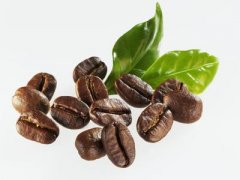
A brief introduction to the origin, development, history and culture of Columbia Huilan boutique coffee beans with soft taste.
The pure taste of Colombian coffee, in addition to the natural environment with the most favorable conditions for coffee growth, is inseparable from the hard work of local growers. In Colombia, coffee cultivation has reached 1.07 million hectares, there are about 302000 coffee plantations in the country, and 30 to 40 per cent of the rural population depends directly on coffee production. There are many farms in Colombia, but

Iron Pickup and Arabica Flavor Description Characteristics Variety Taste Grind Scale Treatment Introduction
The natural advantages of Yunnan coffee cultivation attracted the world coffee giant Nestle, which has promoted the cultivation of Arabica coffee in Yunnan since the late 1980s. In 2011, Starbucks, another international coffee giant, set up a joint venture with Yunnan to ensure a long-term supply of premium coffee beans.

A brief introduction to the treatment method of grinding degree and baking degree of Colombian Huilan boutique coffee beans with strong aroma
The pure taste of Colombian coffee, in addition to the natural environment with the most favorable conditions for coffee growth, is inseparable from the hard work of local growers. In Colombia, coffee cultivation has reached 1.07 million hectares, there are about 302000 coffee plantations in the country, and 30 to 40 per cent of the rural population depends directly on coffee production. There are many farms in Colombia, but

Characteristics of Iron pickup and bourbon varieties and treatment of Tarazhu Coffee beans in Costa Rica
Global coffee bean tree species are mainly divided into: Arabica and Canephora, of which Arabica coffee beans account for more than 100 coffee varieties of 70%80%coffee. The more common coffee varieties are: Arabica Arabica, with outstanding personality and unique flavor, is the main force of boutique coffee, mainly used in coffee shop management and high-end coffee market supply; Robsta

The cultivation of Maraka Dula boutique coffee beans in Nicaragua with good taste geographical location climate altitude
Compared with these botanical characteristics, people may be more concerned about the taste of Kaddura. At the site where Kaddura is planted, the higher the altitude, the higher the quality, but the corresponding yield is also less. When Kaddura is slightly roasted, the sour aroma is obvious and the whole is bright, and the sweetness can be very good with proper treatment, but the mellowness of coffee is relatively low compared with bourbon, and the taste is a little less clean.

A brief introduction to the flavor and aroma characteristics of Colombian Huilan boutique coffee beans with soft taste
Colombian coffee has a balanced flavor and a smooth taste, just like a gentleman in coffee. He has a wide range of producing areas, best known as Medellin, Armenia and Manizales. Traditionally known as MAM Colombian Coffee, the grower of Colombian Coffee, Arabica Coffee

What are the characteristics of East Timor alpine organic coffee? The cultivation of coffee in East Timor
The Coffee Workshop (official Wechat account cafe_style) although Timor-Leste's image as a coffee-producing country is still a bit low-key, the country's history as a coffee producer is unique and its commitment as a specialty coffee producer is enormous. The Portuguese introduced coffee to East Timor in the 1860s. It's very...

Common varieties of coffee, what are Arabica, Robbosa beans?
Professional coffee knowledge exchange more coffee bean information please follow the coffee workshop (Wechat official account cafe_style) common varieties of coffee, what is Arabica, Robbins tower beans? Coffee Rubiaceae is an evergreen plant of the genus Coffee with white flowers and fragrant coffee beans, which are actually the sun-dried pulp and peel of coffee seeds that can be used to make tea, called Cascara Tea

A brief introduction to the cultivation of Java Coffee Fine Coffee Bean in its producing area
At present, 90% of the coffee beans exported from Indonesia are Robusta beans, and only 10% are Arabica. Before 1920, due to a major environmental disaster, Indonesian coffee varieties were replaced with Robusta beans, so Mandarin coffee in Sumatra is a rare Arabica bean, a treasure before it was discovered in the Blue Mountains. The output of such authentic products is also very small. There are in Java.

Types and varieties of coffee
Coffee is a plant of the genus Coffea genus of Rubiaceae. According to the study of Chevalier,1947, there are 66 species in four groups, including 24 species in Eucoffea group, 18 species in Mascarocoffea group, 13 species in Paracoffea group and 11 species in Argocoffea group.
Tiebika (Typica) Tibicati pickup truck
Tiebika (Typica Tibikati pickup) is the species name of coffee beans and is one of the oldest varieties of Arabica. Iron pickup, also known as the old variety of small-grain coffee, its yield is less, cultivation is difficult, so the price is much higher than ordinary small-grain coffee. Tibica coffee, native to Ethiopia and southeastern Sudan, is the most widely cultivated in the Western Hemisphere.
Types and varieties of coffee
Coffee is a plant belonging to the genus Coffea in the Rubiaceae family. According to Chevalier (1947), the genus Coffea is divided into four groups with 66 species, including 24 species in Eucoffea group, 18 species in Mascarocoffea group, 13 species in Paracoffea group and 11 species in Argocoffea group

How is the development of Arabica boutique coffee in Thailand? What's the quality of Thai coffee?
Coffee cultivation in Thailand began with a project to eliminate opium cultivation in the 1970s. Similar projects to promote alternative crops have been carried out in many countries in South-East Asia and Arabica coffee cultivation in Thailand has proved to be the most successful. Thailand's booming coffee farms have provided food for the domestic market for decades, and Bangkok and other cities have a distinctive coffee culture with Australia, Europe or the United States.

What are the two major varieties of coffee? what are the differences in the characteristics of Vietnamese Robusta coffee beans?
Professional coffee knowledge exchange more coffee bean information please follow the coffee workshop (Wechat official account cafe_style) front street-Robusta coffee beans introduce the two most important coffee trees in coffee production are Arabica and Robusta. Arabica coffee beans come from the mountains of Yemen and account for about 2/3 of the world's coffee production. In addition, the highlands in the southwest of Ethiopia and Belgium, the Soviet Union

Cultivation and Development of Robusta Coffee
"Robusta" coffee, commonly known as "sturdy beans", can be grown at low elevations (200 to 800 meters above sea level), has strong resistance to diseases and insect pests, is not vulnerable to agricultural disasters, has a high annual output per unit area, and is harvested in large quantities by machine. in general, the cost of production is much lower than that of Arabica coffee. "Robusta" coffee usually has an ordinary, rigid and pungent flavor, and because

Coffee tasting: what's the difference between Arabica coffee and Roberta coffee? Sumatra, Indonesia
Arabica beans are an important kind of commercial coffee with a period of less than three years and have high-quality aroma and sour taste. Arabica coffee beans are mainly produced in South America (except parts of Argentina and Brazil), Central America, Africa (Kenya, Ethiopia, mainly East African countries), Asia (Indonesia, Yemen, India, Papua New Guinea).

Liberian Caffeine Content-Caffeine Content of One Cup of Coffee
Coffea arabica beans are flat, elongated, oval in shape, with a good aroma and sour taste. The trees are 56m tall and cultivated at low altitudes of 500-2000m. They are not tolerant to low temperatures and high temperatures, nor to much rain and little rain. They are very weak in corrosion resistance, and have poor resistance to leaf rust.
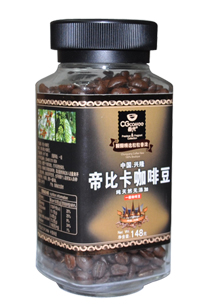
The variety and style of Typica Tibikati pickup truck
Tiebika (Typica Tibikati pickup) is the species name of coffee beans and is one of the oldest varieties of Arabica. Iron pickup, also known as the old variety of small-grain coffee, its yield is less, cultivation is difficult, so the price is much higher than ordinary small-grain coffee. Tibica coffee, native to Ethiopia and southeastern Sudan, is the most widely cultivated in the Western Hemisphere.